Permanent and temporary exhibitions
Permanent exhibitions usually provide a broad institutional route through subjects, collections or local industrial history. They often support repeat visits because objects, labels and spatial sequences remain stable. Temporary exhibitions can take a sharper position, bring together loans or test a new interpretation.
Check the official museum page for current dates, access arrangements and any separate admission requirement. A temporary show may change the best order of a visit, especially when timed entry is used.
More than a visual environment
An exhibition should make its evidence inspectable. Look for object information, source references, diagrams and distinctions between established knowledge, interpretation and open questions. A strong installation gives visitors more than atmosphere. It provides a route to understanding.
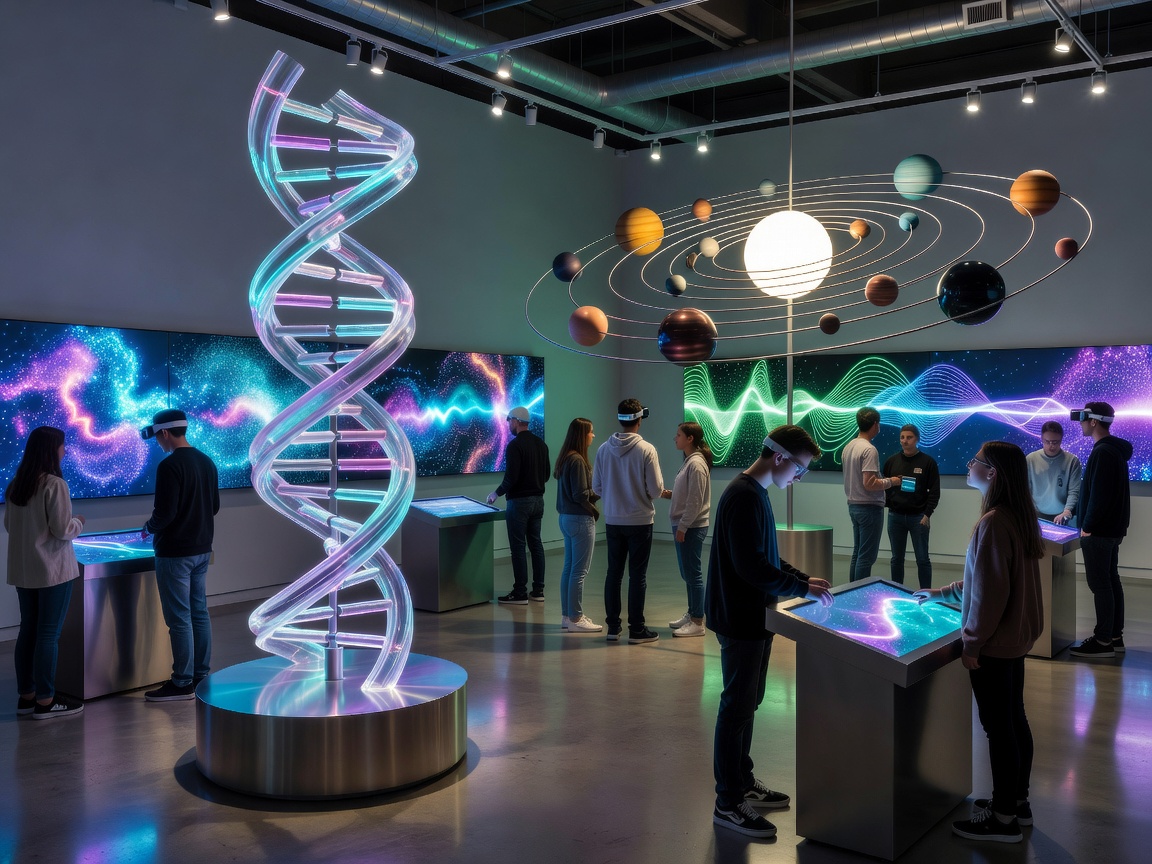
Digital exhibits can add simulation, scale and hidden layers. They can also obscure the underlying process behind an attractive interface. Ask what the screen lets you change, what response it produces and whether the result is explained. Immersion is a format, not a guarantee of depth.
Interaction and demonstration spaces
Interactive installations are most useful when the action has a clear relationship to the idea. Demonstration spaces add live timing and social explanation. Both benefit from readable instructions, enough room to stand, and alternatives for visitors who cannot use the main control.
Observe the rhythm of the room. Dense text, loud sound and bright moving displays can compete for attention. Accessible interpretation may include captions, transcripts, tactile elements, audio description, large print and quiet options. Confirm the current provision directly with the museum.
Evaluation checklist
- What question does the exhibition establish?
- Which objects or records provide evidence?
- Can visitors see how the explanation was built?
- Does interaction reveal a relationship or only trigger content?
- Are different reading speeds and access needs supported?
- Can the exhibition be understood without prior specialist knowledge?
Good for
- Visitors deciding between several current shows.
- Researchers comparing interpretation styles.
- Teachers preparing a focused museum session.
- Anyone who wants substance beyond an immersive setting.
What to know
- Dates, access, photography rules and entry conditions can change.
- Temporary displays may have separate queues or tickets.
- Online previews rarely show the full reading load.
- Leave time for objects that need close inspection.
Related guides
Understand interaction → Plan timing and access →
Suggest an exhibition topic
Tell us which interpretive format deserves a field note.
Contact the guide