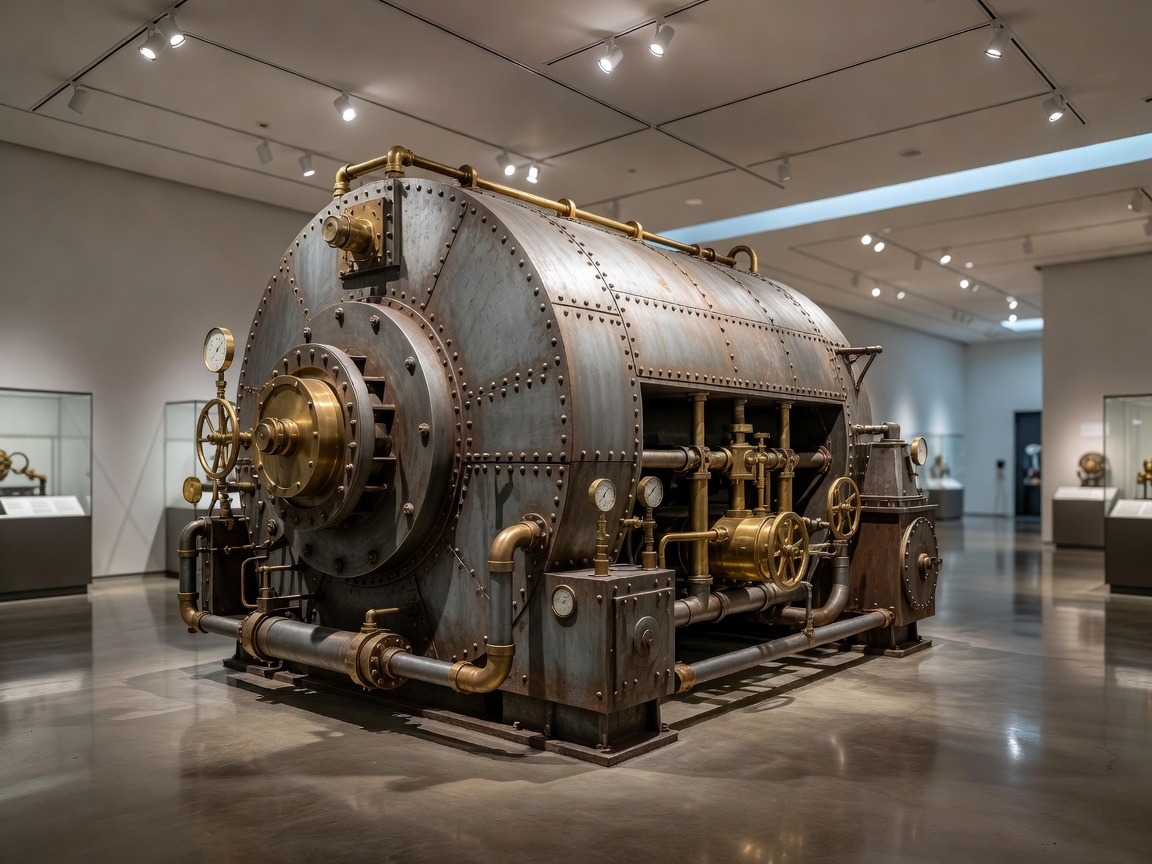
From object to system
A technical collection may include engines, instruments, vehicles, tools, communication devices, computing equipment and energy technologies. The object is only the starting point. Ask what problem it solved, who operated it, what resources it required and what replaced it.
Good interpretation connects a machine to its surrounding system. A transport display can include routes, fuel, maintenance and regulation. A communications display can show cables, switching, protocols and users. A factory object becomes more intelligible when the gallery explains workflow and working conditions.
Industrial and manufacturing history
Industrial heritage is rarely a simple story of progress. It includes experimentation, standardisation, repair, accidents, resource use and changes in employment. Labels should help visitors distinguish an original function from a later museum interpretation.
Look for diagrams, cutaway sections, material samples and maintenance records. These forms of evidence reveal decisions that a polished exterior hides. Scale also matters. A small control instrument may govern a large network, while a large machine may depend on a precise component.
Transport, computing and energy
Transport collections invite comparison between speed, capacity, comfort, infrastructure and environmental cost. Computing collections can show changing storage, interfaces and processing without reducing history to a sequence of famous products. Energy displays are strongest when they explain generation, transmission, conversion and demand together.
Mechanical devices reward slow viewing. Trace the input, transmission and output. Identify where motion changes direction or force changes. For electrical or digital systems, ask what is visible and what has been abstracted away.
Practical comparison
Object-led galleries
Best for: material detail, provenance and close observation.
Trade-off: a static object may not communicate operation without diagrams or demonstrations.
System-led galleries
Best for: relationships between infrastructure, people and technology.
Trade-off: individual objects can become secondary to a broad narrative.
Good for
- Visitors interested in engineering decisions.
- Students studying design, transport or industrial history.
- Anyone who prefers mechanisms to spectacle.
- Families comparing old and current technologies.
What to know
- Check whether large objects are indoors, outdoors or in separate halls.
- Current demonstrations and access routes must be confirmed with the museum.
- Technical labels may reward a second reading after seeing the machine.
- Do not infer working condition from appearance alone.